%20(1).png)
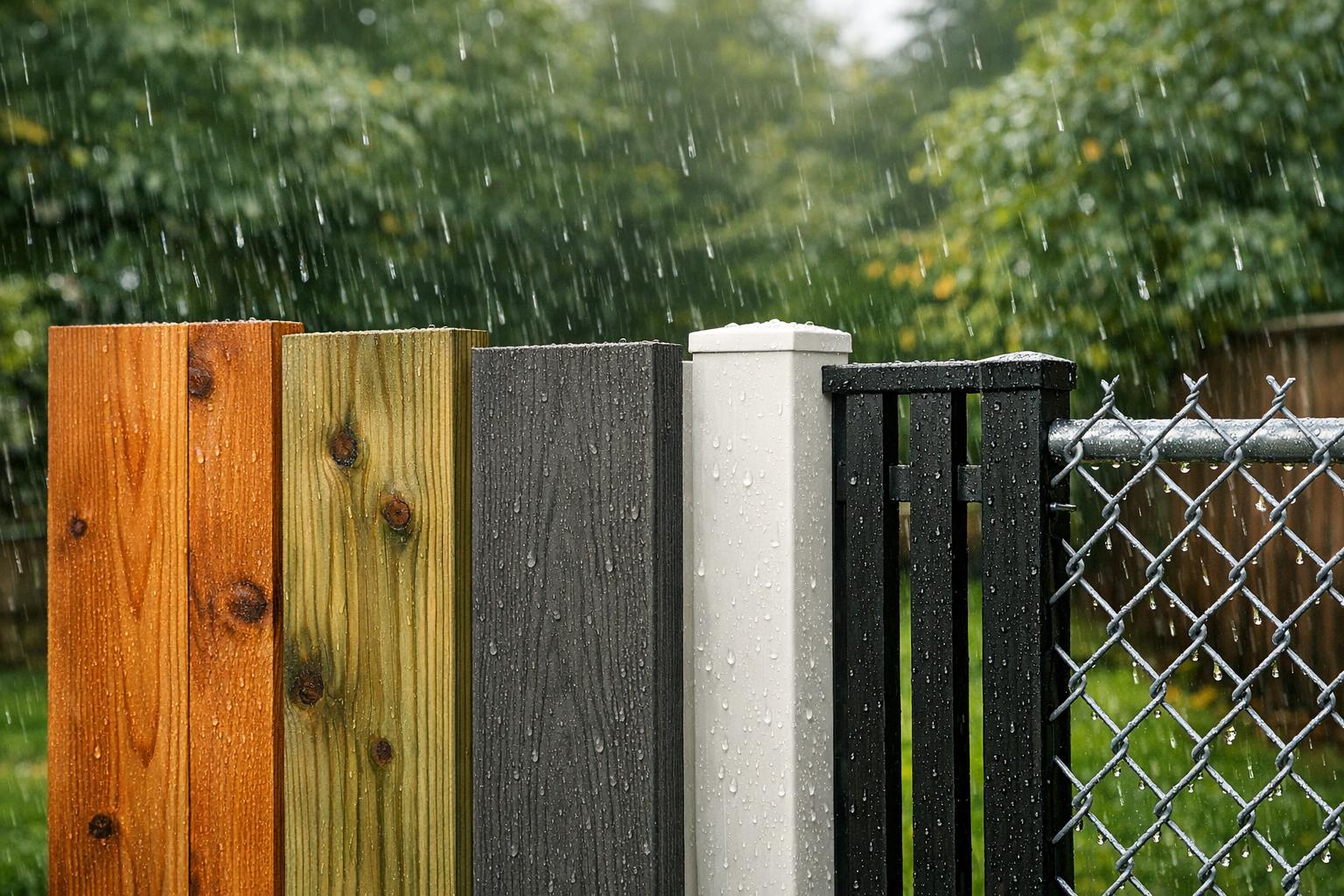
Seattle's rainy climate demands fencing materials that can withstand constant moisture, prevent rot, and last long. Here's a quick breakdown of the best options:
- Cedar Wood: Naturally resists rot but needs regular staining; lasts 15–30 years.
- Pressure-Treated Wood: Affordable but prone to warping; lifespan of 10–20 years.
- Composite Fencing: Durable with wood-like aesthetics but can develop mold; lasts 15–25 years.
- Vinyl Fencing: Fully waterproof and low-maintenance; lasts 20–50 years.
- Aluminum Fencing: Rust-resistant and long-lasting; lifespan of 30–50+ years.
- Chain Link (Galvanized or Vinyl-Coated): Budget-friendly and durable; lasts 20–30 years.
Quick Comparison:
| Material | Moisture Resistance | Maintenance | Lifespan | Cost (Per Foot) | Privacy Level |
|---|---|---|---|---|---|
| Cedar Wood | High | Moderate (Staining) | 15–30 years | $35–$50 | High |
| Pressure-Treated Wood | Moderate | High (Sealing) | 10–20 years | $25–$35 | High |
| Composite | Moderate | Low (Cleaning) | 15–25 years | $60+ | High |
| Vinyl | Excellent | Very Low | 20–50 years | $20–$40 | High |
| Aluminum | Excellent | Very Low | 30–50+ years | $60+ | Low |
| Chain Link | High | Low | 20–30 years | $11–$33 | Low |
For Seattle, vinyl and aluminum are top choices for durability and minimal upkeep. Cedar offers natural beauty but requires more maintenance, while chain link is the most budget-friendly option. Consider your budget, privacy needs, and maintenance preferences when choosing.

Seattle Fence Materials Comparison: Durability, Cost, and Maintenance Guide
1. Cedar Wood
Cedar is a favorite for fencing in Seattle, and for good reason. Its heartwood contains natural compounds like thujaplicins and phenols, which act as fungicides, repel insects, and make the wood resistant to water.
Moisture Resistance
Cedar's natural oils help the wood resist swelling during rainy periods and reduce contraction when it’s dry. Over time, exposure to UV light gives cedar a silver-gray patina - a natural weathering effect. To prevent base rot, especially where posts meet the ground, it’s a good idea to use metal post anchors or concrete footings to keep the wood from touching the soil directly. These qualities make cedar a durable option for wet climates.
Lifespan
A cedar fence in the Pacific Northwest can last anywhere from 15 to 30 years if properly maintained. Using "post-on-pipe" systems, which keep the wood elevated off the ground, can extend that lifespan to 20–30 years. However, without regular care, the fence's lifespan could drop to just 10–15 years.
Maintenance Needs
To keep cedar looking and performing its best, annual cleaning with mild soap or oxygen bleach is recommended. Staining every 2–5 years helps protect the wood from UV damage. Clearing debris from the base of the fence is also crucial to prevent moisture buildup.
"A client in Green Lake skipped staining for 5 years. We replaced their fence with a Hog Wire combo. Lesson learned!" - Cool Cat Fence
Cost
Cedar fencing costs between $35 and $50 per linear foot, including materials and installation. If you opt for staining, that adds $8–$15 per linear foot. While cedar costs more upfront than pressure-treated pine, its natural resistance to rot means you won’t need chemical treatments, which saves money in the long run.
Privacy Level
Cedar is an excellent choice for privacy fencing. Solid styles like Board-on-Board or Shadowbox completely block visibility with no gaps. For those who prefer some airflow while maintaining privacy, designs such as Hog Wire or lattice-top panels offer a great alternative.
2. Pressure-Treated Wood
Pressure-treated wood, often pine or fir, is treated with preservatives to help it resist rot, mold, and pests. It’s a cost-effective option for building fences in Seattle . However, despite these treatments, the wood’s natural softness makes it prone to warping, twisting, and splitting, especially under Seattle's frequent rain .
Moisture Resistance
The treatment primarily protects the outer layers of the wood, leaving the inner core vulnerable. Water can seep in through cracks, nail holes, or cut ends, exposing the untreated center. Seattle’s clay-heavy soils exacerbate the problem by retaining moisture around fence posts long after the rain has stopped, accelerating decay at the ground level.
"In the Pacific Northwest... dirt holds moisture long after rainfall... buried wood absorbs water, cannot dry properly, and eventually breaks down at the ground line." – Rain City Fence
Without a protective sealant, pressure-treated wood is at risk of warping and splitting, which directly impacts its durability.
Lifespan
With regular upkeep, a pressure-treated wood fence can last between 10 and 20 years . However, in Seattle’s damp climate, fence posts may fail in as little as 7–12 years due to constant soil saturation. If moisture reaches the untreated core, the wood could fail within just a year.
Maintenance Needs
To combat its tendency to decay, pressure-treated wood requires consistent maintenance. Homeowners should clean off moss and mildew annually and apply a stain or sealant every 1–3 years to maintain a moisture barrier . Keeping sprinklers and plants away from the fence helps reduce exposure to constant dampness. For added protection, using gravel-filled or well-drained concrete post holes can prevent water from pooling at the base. Regular inspections for cracks are essential to catch problems early and prevent deeper moisture penetration.
"Pressure-treated pine resists rot when sealed promptly." – Cool Cat Fence
Cost
Pressure-treated pine fences typically cost between $25 and $35 per linear foot installed. While the initial cost is lower than cedar or redwood, the frequent staining, sealing, and potential board replacements can make the long-term costs higher.
Privacy Level
Pressure-treated wood is ideal for 6- to 8-foot privacy fences. Solid panels made from this material provide excellent seclusion, making them a great choice for urban lots in Seattle’s densely populated neighborhoods .
3. Composite Fencing
Composite fencing combines recycled plastic with wood fibers, offering a natural wood-like appearance while being more resistant to rot compared to traditional wood. This material strikes a balance between aesthetics and durability, making it a practical choice for Seattle's consistently damp climate. However, while it minimizes water absorption, it doesn’t completely eliminate it.
Moisture Resistance
Composite fencing holds up better against rot than standard wood, but its recycled wood fibers can still absorb moisture. Over time, this can lead to microcracks, mold stains, and even fungal growth. Research from the USDA Forest Products Laboratory highlights that wood-plastic composites exposed to prolonged wet conditions may develop these issues.
"Composite fences may resist rot, but most composite fences have recycled wood fibers that can soak up moisture over time, leading to mold stains, fading, and warping." – Inline Fence
Unlike vinyl, which is entirely non-porous, composite materials can trap moisture within their wood-plastic structure. This makes them vulnerable to algae and mold in Seattle’s damp environment.
Lifespan
In the Pacific Northwest, composite fencing generally lasts between 15 and 25 years, placing it between pressure-treated wood and vinyl in terms of longevity under rainy conditions.
Maintenance Needs
Composite fences require less maintenance than wood but still need occasional cleaning. Regularly removing debris and cleaning the surface helps prevent algae and mold buildup. It’s also a good idea to check for scratches or cracks, as these can allow water to seep into the material and cause further damage.
Cost
Among common fencing options, composite fencing has the highest initial cost. The dense, heavy panels demand more labor during installation, increasing overall expenses. While you won’t need to budget for annual staining, setting aside funds for specialized cleaning products or refinishing to address fading or mold issues is a smart move.
Privacy Level
Thanks to its solid construction, composite fencing is perfect for 6- to 8-foot privacy fences. Its dense panels provide both visual privacy and a sturdy barrier, making it a popular choice for properties in Seattle.
4. Vinyl Fencing
Vinyl fencing stands out as the most weather-resistant fencing option for Seattle's rainy climate. Made from PVC, this material is completely non-porous, which means it doesn’t absorb water. That’s a big deal in the Pacific Northwest, where wood fences often struggle with rot, warping, and splitting due to constant moisture exposure.
Moisture Resistance
Vinyl's non-porous surface makes it immune to moisture-related issues. It naturally resists mold, mildew, and moss - common nuisances in damp environments. Plus, pests like termites and carpenter ants, which thrive in wet wood, have no interest in vinyl.
"Vinyl, made from pvc materials, is 100% non-porous and will not absorb water. It keeps its shape even in extreme temperatures or high heat." – Inline Fence
This resistance to moisture plays a key role in vinyl’s durability, allowing it to maintain its integrity over time.
Lifespan
With professional installation, vinyl fences can last 20 to 30 years in Seattle’s wet climate. High-quality vinyl that includes UV stabilizers, like titanium dioxide, can push that lifespan to 50 years or more. Vinyl’s durability is also tied to its strength and flexibility - it’s about five times stronger than wood and bends under wind pressure instead of breaking.
Maintenance Needs
One of vinyl’s biggest perks is how little maintenance it requires. There’s no need for staining, painting, or sealing. A simple rinse with a garden hose is usually enough to keep it clean. For tougher stains or mildew in shaded areas, a mild soap-and-water solution and a soft sponge will do the trick. After winter, it’s a good idea to check for leaning posts or debris that might affect drainage.
Cost
As of 2025, installing a vinyl fence typically costs between $20 and $40 per linear foot. For a standard 150-linear-foot backyard fence, the total cost - including labor and materials - ranges from $3,500 to $6,500. While the upfront expense is higher than wood, vinyl eliminates recurring costs for staining, sealing, or repairing rot, making it a cost-effective choice in the long run. To ensure stability in Seattle’s rain-soaked soil, posts should be set 30 inches deep in concrete-filled holes.
Privacy Level
Vinyl fences provide excellent privacy with their solid, gap-free panels that effectively block sight lines. Standard panels are typically 6 to 8 feet wide, making them a great choice for urban neighborhoods where homes are close together. Another bonus? Vinyl doesn’t shrink over time, so the privacy it offers remains consistent. A well-installed vinyl fence can even boost your home’s resale value by as much as 10%.
Given all these advantages, vinyl fencing is perfectly suited to Seattle’s unique weather conditions. For professional vinyl fence design and installation in the area, check out Build Pro Home Service. They provide expert solutions that combine durability with aesthetic appeal.
sbb-itb-6a6b82b
5. Aluminum Fencing
Aluminum fencing is a smart, rust-resistant choice, especially for Seattle's damp climate. Unlike wrought iron, which needs regular treatments to fend off rust, aluminum naturally resists corrosion and doesn't absorb moisture - a key advantage in a city that sees over 150 rainy days each year.
Moisture Resistance
Thanks to its non-porous surface, water simply slides off aluminum without causing damage. Most aluminum fences are finished with a powder coating that shields against moisture and UV rays. For homes near Puget Sound, this coating also stands up to the salty air.
"Aluminum resists rust and corrosion, thriving in Seattle's damp climate without needing regular treatments." – Economy Landscaping
Lifespan
When installed correctly, aluminum fences can last an impressive 30 to 50+ years, even in wet climates. This longevity outperforms pressure-treated wood, which typically lasts 10 to 20 years, and is comparable to vinyl. Its lightweight construction makes it a good fit for sloped yards, and its 100% recyclability appeals to environmentally conscious homeowners in Seattle.
Maintenance Needs
Aluminum fencing requires very little upkeep. A twice-yearly wash with mild soap and water is usually enough to keep it looking great. To maintain its finish, lubricate gate hardware every few months and promptly cover any scratches with a rust-inhibiting primer and exterior metal paint. Trimming nearby shrubs and trees to maintain a 12-inch gap also helps ensure proper airflow.
Cost
While aluminum fencing comes with a higher upfront cost, it eliminates the recurring expenses of staining, sealing, or replacing boards. Over a lifespan of 30+ years, this minimal maintenance makes it a more cost-effective option compared to wood, which typically requires upkeep every 2 to 3 years.
Privacy Level
Aluminum fences often feature ornamental designs with spaced pickets, which provide security, airflow, and visibility but less privacy than solid wood or vinyl panels. In urban settings where more privacy is needed, climbing vines or privacy slats can be added. Aluminum is also a popular choice for pool enclosures, meeting safety standards while resisting damage from rain and pool water.
Next, we’ll dive into galvanized and vinyl-coated chain link fences, exploring their durability and weather resistance.
6. Galvanized and Vinyl-Coated Chain Link
After exploring wood, composite, vinyl, and aluminum options, let’s dive into galvanized and vinyl-coated chain link fences.
Chain link fencing stands out as an affordable and durable choice, especially suited to Seattle’s relentless rain. Galvanization involves coating steel with zinc to ward off rust, while a vinyl (or PVC) layer adds an extra, non-porous shield against moisture, snow, and humidity. In the Pacific Northwest, many installers use a combination of both coatings - galvanized steel topped with vinyl - to extend the fence’s lifespan to 20–30 years, even in persistently damp conditions.
"While ordinary steel chain link will rust over time, it won't rust if it is galvanized or vinyl coated." – Natural Enclosures
Moisture Resistance
Thanks to its dual protective layers, chain link fencing handles Seattle’s wet climate exceptionally well. The combination of galvanized steel and vinyl makes it resistant to moisture, corrosion, and moss build-up. Unlike wood, it doesn’t warp or fail during the city’s soggy winters. That said, if the protective coating gets scratched or wears off, rust can form. For areas near the coast, like Alki Beach or Magnolia, using marine-grade stainless steel fasteners is a smart way to combat salt-air corrosion.
Lifespan
With proper installation, chain link fences can last 20 to 30 years in Seattle’s damp environment. To ensure this longevity, it’s crucial to set the posts in concrete-filled holes with sloped footings. This prevents water from pooling at the base, which can accelerate wear.
Maintenance Needs
Chain link fencing is low-maintenance by design. A quick rinse with a hose now and then is enough to clear away debris. It’s also wise to check the vinyl coating for any scratches or damage, as exposed metal can rust in Seattle’s moist air. Trimming nearby vegetation can help reduce trapped moisture and prevent unnecessary strain on the fence.
Cost
For Seattle homeowners, chain link is the most budget-friendly fencing option. Its initial cost is far lower than wood, vinyl, or aluminum, and its minimal upkeep means you won’t need to spend on staining, sealing, or replacing boards during its 20–30-year lifespan.
Privacy Level
The open mesh design of a standard chain link fence offers very little privacy. However, you can enhance privacy by adding slats or growing climbing plants to fill the gaps. On the upside, the open design allows air to flow freely, which reduces wind pressure. That said, in windy areas like Alki Beach, the fence might rattle during storms.
With these details in mind, we’re now ready to compare all the materials side by side to help you find the best fit for your Seattle property.
Comparison of Fence Materials
After diving into the details of various fencing materials, here's a simplified comparison tailored for Seattle's unique climate. This table highlights key factors - such as moisture resistance, maintenance, lifespan, cost per linear foot, and privacy level - to help you make an informed decision.
| Material | Moisture Resistance | Maintenance Requirements | Expected Lifespan | Cost Range (Installed/ft) | Privacy Level |
|---|---|---|---|---|---|
| Cedar Wood | High (Natural oils) | Moderate (Stain every 2–3 years) | 15–30 years | $55–$115 | High |
| Pressure-Treated Wood | Moderate (Chemical treatment) | High (Annual sealing) | 10–20 years | $11–$50 | High |
| Composite | Moderate to High (Can wick water) | Low (Periodic mold cleaning) | 15–30 years | $60+ | High |
| Vinyl | Excellent (Non-porous) | Very Low (Occasional rinse) | 20–50 years | $60–$70 | High |
| Aluminum | Excellent (Rust-proof) | Very Low (Occasional cleaning) | 30–50+ years | $60+ | Low |
| Chain Link | High (if coated or galvanized) | Low (Minimal cleaning) | 20–30 years | $11–$33 | Low (unless enhanced with slats) |
Moisture resistance is a critical factor in Seattle's damp climate. Vinyl and aluminum perform exceptionally well, with non-porous and rust-proof properties. Cedar, thanks to its natural oils, also holds up well, while pressure-treated wood offers moderate resistance but may warp over time. Composite fencing resists moisture decently but can develop mold, especially in shaded or damp areas.
When it comes to maintenance, vinyl and aluminum are the clear winners, requiring only occasional rinsing or light cleaning. Cedar needs staining every 2–3 years to maintain its protective barrier, while pressure-treated wood requires more frequent sealing. Composite and chain link fences fall somewhere in the middle, needing periodic cleaning to stay in good shape.
Cost varies widely depending on the material. Chain link and pressure-treated wood are the most affordable, starting at around $11 per linear foot. On the higher end, cedar, vinyl, composite, and aluminum range from $55 to $115 per linear foot when installed. Over time, the low-maintenance nature of vinyl and aluminum often offsets their higher upfront costs, making them cost-effective choices for long-term use.
Privacy depends heavily on the design. Solid panel fences made from cedar, pressure-treated wood, vinyl, or composite provide excellent screening. Aluminum and chain link offer less privacy unless enhanced with slats or paired with climbing plants for added coverage.
This comparison highlights the pros and cons of each material, helping you weigh your options for Seattle's climate. For tailored advice and professional installation, consider reaching out to local experts like Build Pro Home Service.
Conclusion
When choosing a fence, consider your budget, preferred style, and how much maintenance you're willing to take on. If you're looking for a durable, low-maintenance option, vinyl is hard to beat. It's completely non-porous, meaning it won’t absorb moisture, rot, or warp - even after years of exposure to the Pacific Northwest's relentless rain. As Inline Fence explains:
"Vinyl is as close as you can get to a low maintenance fence. Because it's completely waterproof, it doesn't need sealing, staining, or painting - ever".
For those drawn to the natural beauty of Western Red Cedar, be prepared for a bit more maintenance. To keep its protective qualities intact, you'll need to apply a fresh stain every 2–3 years.
Ultimately, your choice comes down to what fits your lifestyle. If you're working within a tighter budget, pressure-treated wood or chain link might be appealing, though they require more upkeep over time. On the other hand, aluminum and vinyl offer long-term durability with minimal effort. Aluminum fences, for example, can last 40–50+ years without rusting and require almost no maintenance, making them a smart investment despite the higher upfront cost.
If maintenance isn't your thing, vinyl or aluminum are your best bets - just a quick rinse with a garden hose now and then is all they need. But if you value the charm of natural wood and don’t mind a bit of work, cedar could be the perfect fit for your yard.
FAQs
What are the best durable and low-maintenance fence materials for Seattle's rainy climate?
Seattle's famously rainy weather demands fencing materials that can handle moisture while staying low-maintenance. Vinyl fencing is a top pick for this environment. It’s resistant to moisture, won’t warp or rot, and requires little effort to keep clean - just rinse it occasionally with water or mild soap. Plus, high-quality vinyl fences can hold up for 20–30 years or more, retaining their color and strength over time.
Another solid choice is composite fencing, made from a blend of wood fibers and recycled plastic. It delivers the classic look of wood without the hassle of regular staining or sealing. Composite fences are also resistant to mold, insects, and moisture, making them a practical and stylish option for homeowners who want durability with a warm, wood-like finish.
For expert design and installation, Build Pro Home Service offers tailored solutions for vinyl and composite fences across Seattle. Their skilled craftsmanship ensures your fence will withstand the region’s wet climate while requiring minimal upkeep.
Is vinyl fencing more cost-effective than other materials over time?
Vinyl fencing might cost more upfront than basic wood fencing, with materials typically priced between $20 and $40 per linear foot, compared to wood's $15 to $30 per linear foot. That said, vinyl generally requires less labor for installation - around $5 to $10 per foot, whereas wood installation averages $7 to $12 per foot.
What sets vinyl apart is its long-term value. It’s incredibly durable and requires almost no maintenance, unlike wood, which often demands regular sealing, staining, or repairs. Over time, these savings on upkeep can make vinyl the more budget-friendly option.
How can I maintain a cedar fence to handle Seattle’s rainy weather?
Cedar fences are known for their durability, but Seattle’s rainy conditions mean they need consistent upkeep to stay in top condition. Begin each spring by giving your fence a good cleaning. Use a soft-bristle brush and mild detergent to gently scrub away moss, mildew, and dirt. Skip the pressure washer - it might seem like a quick fix, but it can harm the wood. Once cleaned, check for any loose fasteners, cracks, or signs of rot, and take care of repairs or replacements as needed.
When summer rolls around, it’s time to shield your fence from the elements. Apply a weatherproof sealant or stain that’s specifically made for cedar. This step helps guard against harmful UV rays and moisture. Plan to reapply the sealant every two years to keep mold, mildew, and rot at bay. As fall approaches, clear away any leaves or debris that could trap moisture, and touch up any spots where the sealant has worn thin. During winter, keep vegetation trimmed back to prevent it from holding water against the wood, and double-check that the fence posts are still secure.
If you’d rather leave the hard work to the pros, Build Pro Home Service offers comprehensive cedar fence maintenance. From cleaning and repairs to applying sealant, they’ll make sure your fence remains sturdy and attractive year-round.
%20(1).png)